African Music Power and Being in Colonial Zimbabwe Review
Amazing Power of Music Revealed
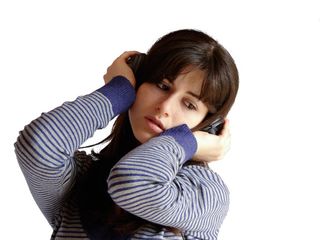
More than 7,000 runners who raced earlier this month in a half-marathon in London were nether the influence of a scientifically derived and powerful performance-enhancing stimulant — pop music.
The dance-able, upbeat music at London's "Run to the Beat" race was selected on the basis of the research and consultation of sport psychologist Costas Karageorghis of Brunel University in England. He has learned how to devise soundtracks that are just equally powerful, if non more so, equally some of the not-then-legal substances that athletes commonly take to excel.
"Music is a great way to regulate mood both earlier and during physical action. A lot of athletes utilise music every bit if it'due south a legal drug," Karageorghis told LiveScience. "They can use it as a stimulant or as a allaying. Generally speaking, loud upbeat music has a stimulating issue and tiresome music reduces arousal."
The link between music and able-bodied operation is just one example of the inroads scientists and doctors are making into understanding the amazing power that music has over our minds and bodies. Science is backing up our intuition and experience, showing that music really does impale pain, reduce stress, better our brains and basically alter how nosotros experience life.
Music reduces stress
For instance, more and more health professionals, including pediatrician Linda Fisher at Loyola University Hospital in Illinois, are playing therapeutic music for patients in hospitals, hospices and other clinical settings to improve their healing.
"The music I play is not necessarily familiar," said Fisher, who is finishing upwardly coursework toward certification as a music-for-healing practitioner. "Information technology'south healing music that puts the patient in a special identify of peace equally far every bit the music's rhythm, melodies and tonal qualities."
Studies washed in the early 1990s at Bryan Memorial Hospital in Lincoln, Neb., and St. Mary's Hospital in Mequon, Wis., ended music "significantly" lowered the centre rates and calmed and regulated the blood pressures and respiration rates of patients who had undergone surgery.
In 2007, a written report in Federal republic of germany found that music therapy helped better motor skills in patients recovering from strokes, Fisher said. Other studies take found that music therapy tin can boost the immune organisation, improve mental focus, help control pain, create a feeling of well-being and profoundly reduce anxiety of patients awaiting surgery.
Forth those lines, music therapy was recently found to reduce psychological stress in a study of 236 pregnant women, according to researchers from the College of Nursing at Kaohsiung Medical University in Taiwan.
Women in the study who listened to pre-recorded CDs of soothing music for thirty minutes daily showed significant reductions in stress, anxiety and depression, said researcher Chung-Hey Chen, who is now based at the National Cheng Kung Academy.
Ane of the CDs featured songs such as Brahms' "Lullaby" and "Twinkle, Twinkle, Little Star." Nature sounds, children's rhymes and songs and music by composers such as Beethoven and Debussy were featured on the other CDs. The results are detailed in a special result The Journal of Clinical Nursing.
Music makes life meliorate overall
Scientists also take confirmed that music definitely provokes memories, as nosotros all accept experienced, to the signal where nosotros don't even have to hear a song. We only recall of it and the memories alluvion in.
Music has also been constitute to ease labor pain, reduce the need for sedation during surgery, make you smarter, and diminish depression.
The right temporal lobe could be a central brain site for processing music, equally one study found that subjects experience increased activeness there when focusing on musical harmony. Other studies have also shown that the temporal lobe, in concert with the frontal lobe, is a primal region for understanding sure musical features.
And while humans like to run to a shell, fish plain as well have their own version of this. In fact, the ability to go along track of time is primal to the behavior and cognitive processing of all living organisms, Mu-ming Poo of the University of California, Berkeley, wrote in the Oct. sixteen issue of the journal Nature.
Among zebrafish, a neural "metronome" or biological clock may help them to remember rhythm over relatively long time periods, Poo and his colleagues establish. When the beat stops, the fish apparently "remember" the beat's rhythm and timing and oft go on to wag their tails in time to information technology. This finding and other research suggests that our power and tendency to proceed time with music is something we inherited from our earliest evolutionary ancestors.
More nearly music and workouts
For all you gym rats, here is exactly what listening to music does for your workout, Karageorghis said. First, information technology reduces your perception of how difficult you are working by about 10 percent during low-to-moderate intensity activity. (During high intensity activity, music doesn't work every bit well because your brain starts screaming at you to pay attention to physiological stress signals).
Secondly, music can accept a profound influence on mood, potentially elevating the positive aspects of mood, such as vigor, excitement and happiness, and reducing depression, tension, fatigue, anger and confusion.
Thirdly, music can be used to prepare your pace — Ethiopian runner Haile Gebrselassie reportedly has asked for the techno vocal "Scatman" to exist played when he competes (he won the aureate medal in the 10,000 meters at the Sydney Olympic Games in 2000; "Scatman" presumably went unplayed during the race).
Finally, music can be used to overcome fatigue and command ane's emotions around competition. The hurdler Edwin Moses, who competed for the Usa in the 70s and 80s and had a 122-race winning streak between 1987 and 1997, used laid-back soul tunes every bit part of his pre-race routine, Karageorghis said.
The "Run to the Beat" music was played equally runners at the Oct. 5 one-half-marathon event passed by 17 stations, not throughout the 13.1-mile form, considering Karageorghis' research shows that music is nigh effective when we are losing steam, not as a constant stimulus. For the rest of us at the gym or on our a.1000. jogs, he recommends two workouts with music to every one without, so the effect is not dulled.
Sports-music fusion festivals
Karageorghis and his post-doctoral researcher collected data during the "Run to the Beat" half-marathon, assuasive them to test theories on thousands of alive runners outside the lab.
Despite driving winds and heavy pelting during the upshot, mail service-race interviews suggested that the runners found the music inspiring and fun.
In the future, Karageorghis envisions cultural festivals that involve a fusion of sports and music, where the crowd and the athletes are motivated by music playing at stations forth a competitive route, while motivating one another.
"Information technology is beyond the music," he said. "The music creates an esprit de corps, a cohesion you don't normally have in a mass participation event. One of the key causes of motivation is this notion of satisfaction of a psychological demand for relatedness. Having music creates a mutual bond, a social gel, that allows you to nigh satisfy this demand automatically."
- Video: Laptop Orchestra – The Next Stride in Computer Music
- Superlative 10 Mysteries of the Mind
- Why Exercise Nosotros Love Music?

Robin Lloyd was a senior editor at Space.com and Alive Science from 2007 to 2009. She holds a B.A. caste in folklore from Smith College and a Ph.D. and 1000.A. degree in folklore from the University of California at Santa Barbara. She is currently a freelance scientific discipline writer based in New York City and a contributing editor at Scientific American, as well as an adjunct professor at New York Academy's Scientific discipline, Health and Environmental Reporting Program.
faulknerwittentiou.blogspot.com
Source: https://www.livescience.com/2953-amazing-power-music-revealed.html
0 Response to "African Music Power and Being in Colonial Zimbabwe Review"
Postar um comentário